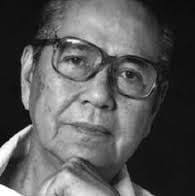
Amado V. Hernandez
National Artist for literature – 1973
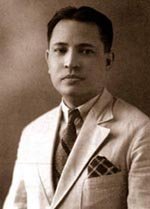
NATIONAL ARTIST FOR LITERATURE – 1973
.
National Artist
Amado V. Hernandez
Amado Vera Hernandez was born in Hagonoy, Bulacan but grew up Tondo, Manila, where he studied at the Manila High School and at the American Correspondence School. While being a reporter, columnist and editor of several newspaper and magazines including Watawat, Mabuhay, Pilipino, Makabayan and Sampaguita, he also honed his poetic craft. He received the Republic Cultural Heritage Award, a number of Palancas and an award from the National Press Club for his journalistic achievements.
After World War II, he became a member of the Philippine Newspaper Guild and his writings increasingly dealt with the plight of the peasants and laborers. Influenced by the philosophy of Hobbes and Locke, he advocated revolution as a means of change. In 1947, he became the president of the Congress of Labor Organization (CLO). His activities and writings led him to imprisonment from 1951 to 1956. Even in prison, he was still a leader and artist, spearheading education programs and mounting musical productions, plays and poetry reading. It was during his incarceration that he wrote one his masterpiece, Mga Ibong Mandaragit (Predatory Birds). His prison writings were smuggled out by his wife, zarzuela star Honarata “Atang” dela Rama, who would become our National Artist for Music and Theater.
Amado V. Hernandez (body of works)
Amado V. Hernandez lived in a nationalist milieu that witnessed a range of Filipinos that were determined to prove to colonizers that they were capable of governing themselves. Hernandez was born on September 13, 1903, Ka Amado as he is called, together with the nationalist leaders and intellectuals in government, the academe, and among the Filipino masses perceived in the postwar agrarian problems in Central Luzon the powerful roots of “social alienation” that would lead to discriminating pressures. [1] He was married to zarzuela actress and queen of kundiman Honorata “Atang” dela Rama and began his writing career as a journalist, and later, editor of several pre-World War II Tagalog news papers. [2]
Moreover, Ka Amado was known for his active participation in the socio-political realm through his literature and his political involvement. During WWII, he served as intelligence officer for the resistance. [3] The discussion of his involvement and participation pre, during and post war will be traced through an account of his life and works, his writings, the Congress of Labor Organization, his wife Atang dela Rama, and the essence of Philippine and Hernandez’s literature.
Life and Works
From 1926 to 1932, Amado V. Hernandez wrote Sariling Hardin a column in verse which was a calendar of happenings and observations on human weaknesses and social background. Meanwhile in 1928, he had a running balagtasan in his column Pagkakaisa against Jose Corazon de Jesus, Huseng Batute in Taliba. Ka Amado defended independence movement and Huseng Batute called him the “poet of the administration” and was included by Julian Cruz Balmaseda among the “poets of the heart”. [4]
Instead of serving under the Japanese administration, Hernandez chose to leave for the hills. He was a major when the American forces returned in October 1944. He was appointed by President Osmeña as councilor of the City of Manila and in 1947, he ran for councilor in the first post-war local elections and won in all four districts of the city. At this time, he was popular for being a pre-war poet laureate and journalist as well as an organizer of the Philippine Newspaper Guild of which he became vice-president. He also helped organize and later on became acting national chairman of the progressive Congress of Labor Organizations or CLO which he said the objective was “to help the worker achieve economic security and to help in his cultural uplift.” [5]
In 1955, Hernandez wrote prison and detention center poems when he was transferred to Muntinlupa from Camp Murphy while waiting for the final ruling of the Supreme Court in his pursuit of the Lower Court decision of lifetime imprisonment due to “rebellion complexed with other crimes.” His appeal lasted for thirteen years before he was totally acquitted. [6] Even before he was acquitted, Ka Amado was already writing for the vernacular magazines, particularly Liwayway.
He wrote Bayang Malaya which is a historical poem that he started and finished inside the little detention room in jail which is commonly called bartolina. It is a historical account of defending the nation and the ordinary citizens against the dominance of the Imperial Japanese Army. When the United States Armed Forces in the Far East (USAFFE) was overpowered in Bataan and Corregidor and were compelled to surrender, guerrillas emerged from the country and continued the strife and defense (Hernandez). USAFFE broke into several minor “commands” and waged guerrilla war against the invaders. [7] The main characters of this poem although not real personas, were symbols of real constructs of the war that created a history in its time. [8]
Ka Amado was imprisoned for five years and six months in Muntinlupa and five other military camps namely: Camp Murphy, Camp Crame, Fort McKinley, Panopio Compound and another camp which he did not know due to a forcible arrest at midnight while he was blindfolded with shackled hands. He has several reasons as to his in-jail poetry and literature. One, he writes to exclaim the greatness of the Filipino guerrillas which were the glory of World War II (MSB) for he believes that if this splendor would soon be long forgotten by the contemporary heroes, history won’t. Another reason that he posited as to why he pursued his literature is that he wanted to prove that the real essence of a poet cannot be incarcerated.
Hernandez has a body of literature that stretches nearly three generations of Philippine literature [9] . He wrote in the introduction Isang Dipang Langit that he was able to write over 170 poems in different periods and in different situations. Some he wrote before 1930, others during his life as a journalist and some he wrote after the war where he was in the middle of different movements in politics and labor.
Writing about Hernandez in 1947, journalist Jose A. Lansang, observed that Hernandez had fine speaking styles in Tagalog which developed during his pre-war poet laureate days which goes over with working class audiences. Lansang notes that Hernandez had “aptness in anecdote and fire of delivery” which shows Hernandez’s being well-read in the English language especially in progressive literature and had developed knowledge of the labor mobilizations in various nations through intensive reading.
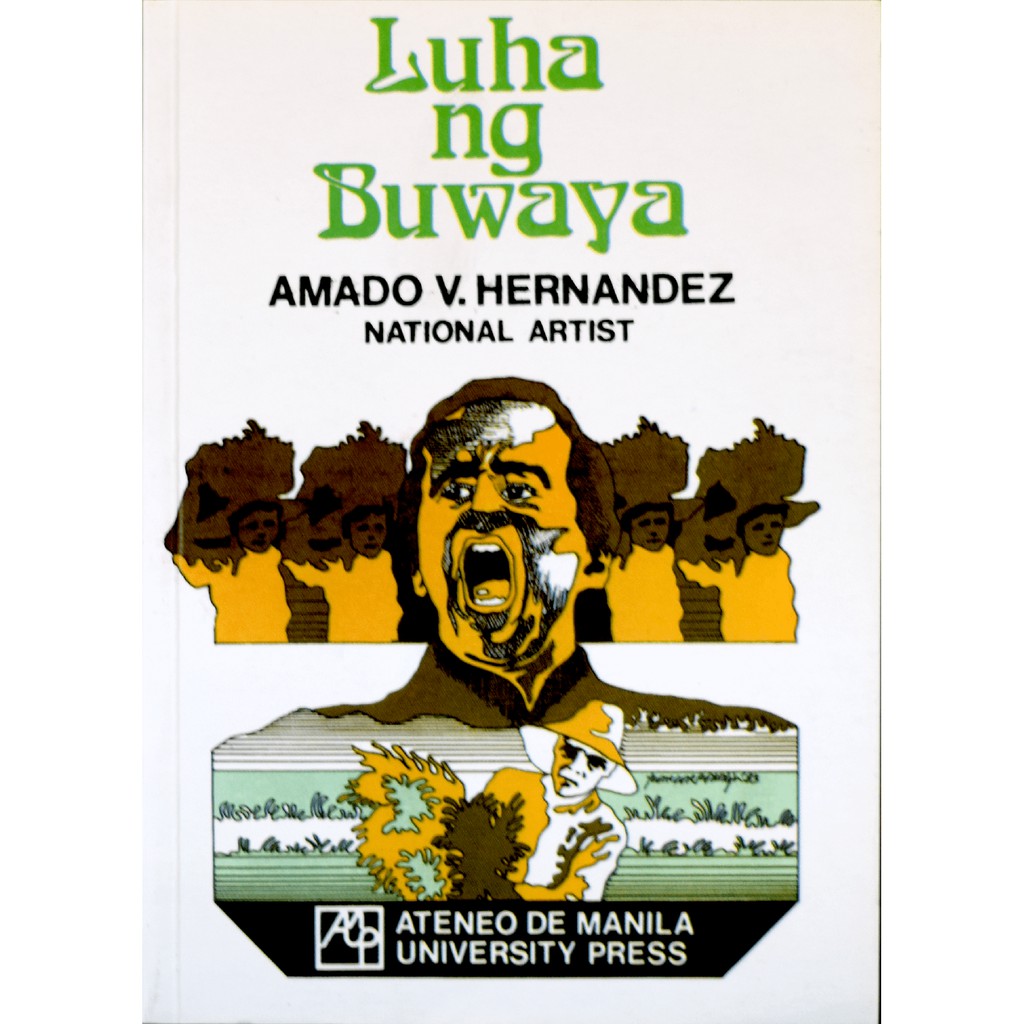
The novel Mga Ibong Mandaragit which was first written by Hernandez while in prison is the first socio-political novel that, like Jose Rizal’s Noli Me Tangere, exposes the grave social cancer achieved in society post-war to the early open conflicts in Central Luzon in the 1950s.
 National Artist